Round Tours
14 Days / 13 Nights12 places
Grand Sri Lanka Island Journey
The complete Sri Lanka experience — ancient kingdoms, hill country, east coast beaches, wildlife and the south coast in one extraordinary two-week journey.
From USD 890
Cultural Triangle
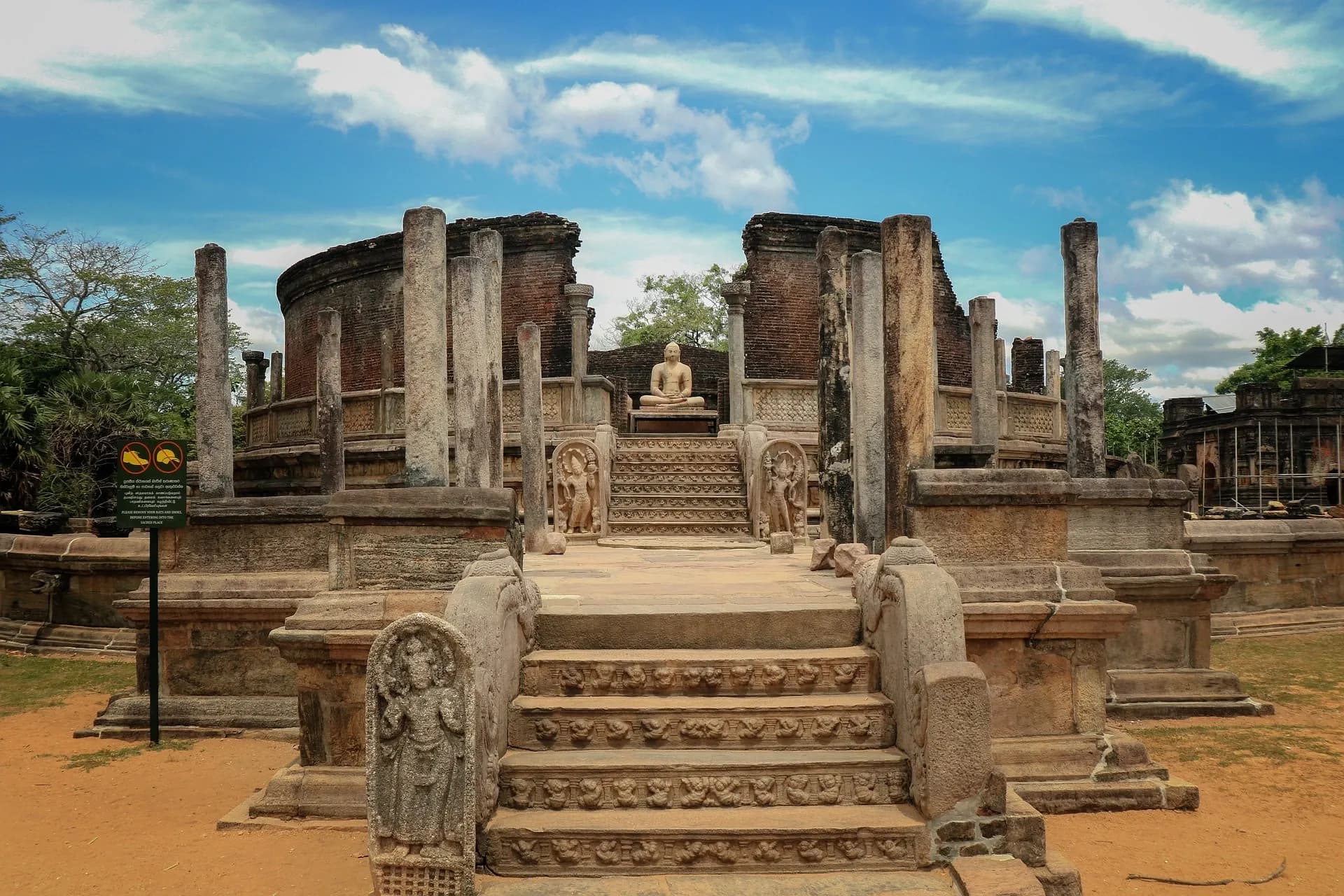
Polonnaruwa served as Sri Lanka's second ancient capital from the 11th to 13th century AD, reaching its greatest extent under King Parakramabahu I (1153–1186 AD). The ruins cover a vast archaeological park that is ideally explored by bicycle, allowing visitors to move at their own pace between the Royal Palace complex, the great Parakrama Samudra reservoir, and the jewel of the site — Gal Vihara. This group of four magnificent Buddha images carved from a single granite face includes a 15m reclining Buddha of serene beauty that many consider the finest piece of ancient art in all of Sri Lanka.
Destination guide
Sri Lanka's medieval royal capital — a UNESCO-listed archaeological park of royal palaces, Buddhist temples and magnificent carved Buddha statues.
Gal Vihara — four magnificent rock-carved Buddhas including a 15m reclining figure
Royal Palace of Parakramabahu — ruins of a 7-storey royal residence
Audience Hall — intricately carved elephant base columns
Vatadage — a beautifully proportioned circular relic house with moonstone steps
Rankoth Vehera — the largest stupa in Polonnaruwa at 55m tall
Parakrama Samudra — a vast 2,500 hectare reservoir built in the 12th century, still in use
Lankatilaka — a towering 17m brick image house with a standing Buddha
Polonnaruwa Museum — excellent introduction to the city's history
Hire a bicycle at the museum entrance and cycle the full archaeological circuit (approx. 3 hours)
Visit Gal Vihara in the morning when golden light falls on the carvings
Take a local guide for 90 minutes of storytelling through the ruins
Watch egrets and storks on the Parakrama Samudra at sunset
Try fresh king coconut from vendors near the ruins
Gallery


Related tours
Round ToursThe complete Sri Lanka experience — ancient kingdoms, hill country, east coast beaches, wildlife and the south coast in one extraordinary two-week journey.
CulturalSri Lanka's ancient kingdoms in 5 days — Sigiriya, Dambulla, Polonnaruwa and Anuradhapura with private storytelling by local guides.